Finding a personal trainer when you hate the gym feels like searching for a needle in a haystack of aggressive marketing and intimidating equipment. You want to build strength and mobility, but the environment where fitness supposedly happens makes your chest tighten before you even walk through the door. That avoidance isn’t a failure of discipline. It’s a rational response to spaces that were never designed with your comfort in mind.
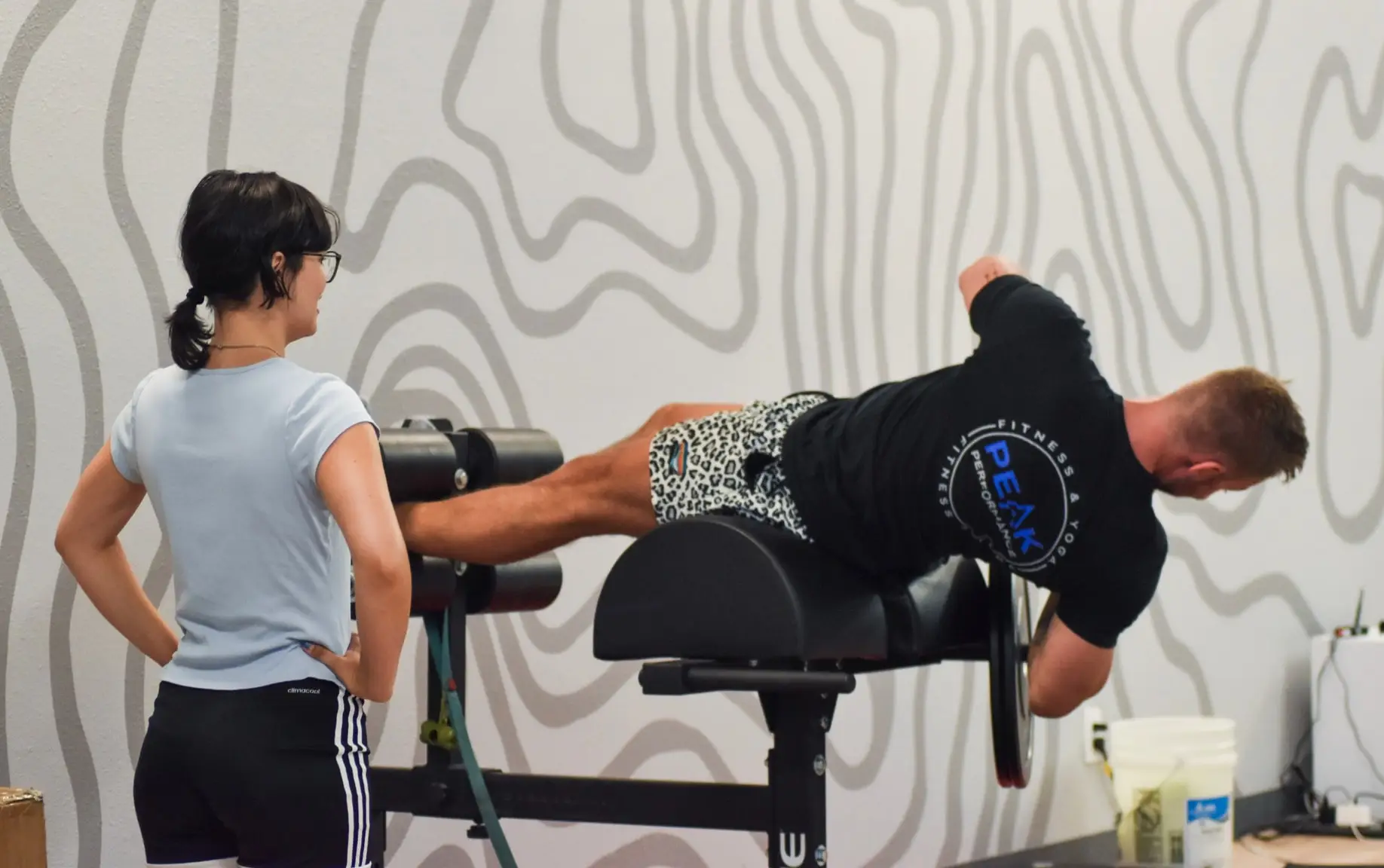
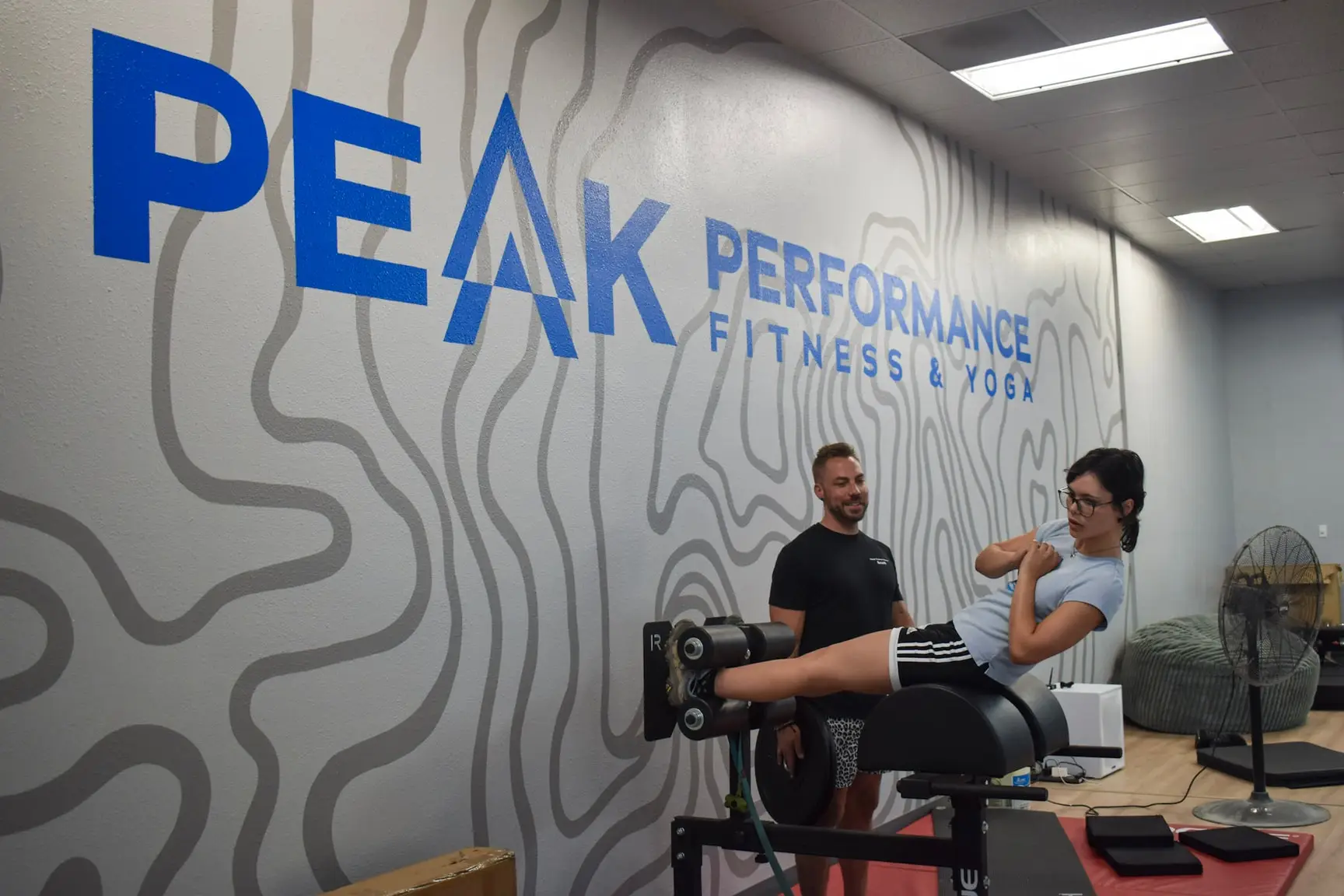
Peak Performance exists because sustainable health needs psychological safety as much as physical effort. We guide you through strength training and yoga coaching in a supportive community that puts your confidence ahead of arbitrary performance metrics. Your fitness journey should feel like a partnership, not a punishment.
Why Traditional Gyms Trigger Anxiety and Avoidance
Commercial fitness centers run on a volume model, and that model creates a high-stress environment for anyone who doesn’t already identify as an enthusiast. The density of bodies, the clanging weights, the unspoken social hierarchy of the free weight section: all of it adds up to sensory overload that triggers a fight-or-flight response instead of focus. You’re trying to learn new movement patterns in a room where everyone else seems to already know what they’re doing, and that makes the learning curve feel impossibly steep.
Identifying Specific Gym Intimidation Factors
Gym anxiety isn’t a vague feeling of inadequacy. It comes from concrete stressors. Crowded floors force you to wait for machines while feeling watched. Confusing equipment layouts make you fear looking incompetent. The lack of clear guidance leaves you guessing about proper form. Together, these factors create exactly the kind of low-intimidation workout studio gap that keeps capable adults away from the resources meant to help them.
How Past Negative Experiences Shape Current Hesitation
Your reluctance likely comes from specific moments: a trainer who pushed you too hard too fast, a class instructor who corrected you in front of everyone, or years of feeling invisible in a space built for bodybuilders. Moments like those teach your nervous system to associate exercise with shame. Fitness for people who hate gyms means unlearning those conditioned responses, and that only happens through consistently positive experiences that prove safety is possible.
Judgment-Free Training in a Private Studio Environment
A private studio removes the performative part of public exercise by limiting who shares your space and when. The only person watching your form is the coach whose job is supporting your progress. No wondering if strangers are judging your squat depth or your pace on the treadmill.
The Difference Between Big Box Gyms and Private Studios
Big box gyms sell access to equipment. Private studios guide a transformation within a controlled setting. Commercial facilities profit from membership attrition and overcrowding, which creates incentives working directly against the patience and attention you need while you’re learning. Our studio caps capacity on purpose, so you never compete for space, equipment, or your coach’s attention during a session.
Creating Psychological Safety Through Consistent Coaching
Psychological safety comes from being able to predict how your environment will respond to your presence and your mistakes. Your coach learns your triggers, respects your boundaries, and adjusts your programming to how you’re actually feeling that day instead of forcing you through a rigid template that ignores your reality. That consistency builds trust faster than any pep talk ever could.
Personalized Coaching Plans That Adapt to Your Comfort Level
Generic routines fail because they assume a baseline of confidence and capability that many adults have never been given the chance to build. Your plan starts exactly where you are today, not where a standardized assessment says you should be. Small wins come first, rebuilding your relationship with movement before complexity or intensity enters the picture.
Personalized coaching treats your history, including old injuries or bad experiences, as data worth working from rather than an obstacle to push through on grit alone. If overhead pressing brings back shoulder pain or memories of an old injury, we change the movement pattern entirely until your nervous system trusts the position again. Confidence-building wins matter more than hitting a rep target when you’re rebuilding your identity as someone who exercises safely.
This isn’t rehabilitation, and it doesn’t replace medical treatment for acute injuries or clinical mental health conditions. It’s strength and mobility coaching built for adults whose real barrier to consistency has been the environment, not their physical limits.
Blending Strength Training Basics With Yoga for Mobility
Pure lifting can feel monotonous or overly aggressive. Purely spiritual practices sometimes lack the progressive overload your body needs for long-term resilience. Combine both and you get a practice that satisfies your body’s need for challenge and your mind’s need for restoration, without forcing you to pick one.
Building Functional Strength Without Bodybuilding Pressure
Strength training basics at Peak Performance focus on movements that translate directly to your daily life, not aesthetic ideals borrowed from competitive bodybuilding. You learn to hinge, squat, push, pull, and carry in ways that make groceries lighter, stairs easier, and playing with your kids more sustainable. Peak Performance combines strength training fundamentals with yoga coaching to build mobility and confidence simultaneously, addressing both physical capability and the mental barriers that keep people away from traditional gyms.
Using Yoga to Restore Mind-Body Connection
Yoga works as active recovery and nervous-system regulation within your training week, not as some separate spiritual pursuit disconnected from your strength goals. Breathwork and mindful stretching calm your system after a hard lift, teaching your body that exertion and safety can live in the same session. You leave restored instead of depleted, which matters when exercise has historically felt like extraction.
Community and Accountability Over Solo Willpower
Willpower is a finite resource. It depletes throughout your day, which makes solo discipline an unreliable foundation for a lifelong habit. Shared accountability spreads the weight of staying consistent across relationships that exist independently of how motivated you happen to feel on a given Tuesday morning.
Finding Support Among Like-Minded Beginners
You benefit from training alongside people who share your starting point, not comparing yourself to veterans who’ve forgotten what uncertainty feels like. Small-group settings build natural camaraderie without forcing socializing, so connection grows out of shared effort rather than awkward icebreakers. Watching someone else work through the same modification you need normalizes the process and eases the isolation that often comes with getting back into fitness as an adult.
Redefining Fitness as Part of a Life Well-Lived
Exercise becomes sustainable when it serves your broader values instead of competing against them as a separate obligation. Community turns a workout from a transaction into a ritual, one that reinforces your identity as someone who invests in their own wellbeing because they deserve to feel capable and present. That reframing matters: guilt-driven compliance collapses under its own weight eventually, while supported habits rooted in belonging compound over decades.
Alternative Exercise Options When You Need Variety
Even the most supportive environment benefits from variation that keeps things from going stale, without asking you to abandon structure. Monotony is a real barrier, and planning for it beats hoping willpower alone carries you through the inevitable plateau.
Breaking Workouts Into Manageable Time Blocks
Research indicates that splitting activity into three 10-minute bouts throughout the day can serve as an effective alternative to a single 30-minute workout for those overwhelmed by time commitment. That flexibility means missing your scheduled session doesn’t equal total failure, which cuts into the all-or-nothing thinking that derails so many well-intentioned routines. Smaller increments also lower the activation energy it takes to start, so consistency stays within reach even on days when motivation is genuinely scarce.
Exploring Movement Outside the Studio Walls
Walking or running five miles daily for a month adds up to 150 miles in that month alone, proof that small, consistent efforts compound into something significant without requiring marathon-level intensity. Movement outside structured training keeps you engaged when studio work starts to feel repetitive, and it reminds your body that fitness exists beyond four walls. Hiking, swimming, dancing, yard work: all of it keeps your relationship with movement multidimensional instead of fragile.
Taking the First Step With a Free Trial Session
The hardest part of any fitness journey is walking through the door when every previous experience has taught you to stay away. Take the financial risk and the contractual obligation out of that first visit, and you can judge fit based on actual experience instead of marketing promises or anxious speculation.
Your personal training free trial session is a conversation and a movement assessment, not a test of your current fitness level or a sales pitch dressed up as consultation. You talk through your history, your concerns, and your goals while experiencing the studio firsthand, giving your nervous system real data to work with. Booking this visit commits you to nothing except showing up as you are, which is exactly where lasting change begins.
Frequently Asked Questions
What can I do if I hate the gym?
Seek out private training studios or small-group environments specifically designed for gym-averse adults rather than forcing yourself to adapt to commercial fitness centers. Look for spaces that emphasize coaching over equipment access, limit capacity to reduce sensory overload, and explicitly welcome beginners without judgment. Your discomfort is valid information about environmental fit, not a personal failing to overcome through sheer willpower.
Is $300 a month a lot for a personal trainer?
Monthly personal training costs vary significantly based on location, session frequency, and whether you choose private or semi-private formats. Compare pricing against the value of sustained consistency and injury prevention rather than hourly rates alone, since cheap programs you abandon cost more long-term than effective ones you maintain. Many studios offer tiered packages that balance professional guidance with budget constraints.
What are some exercise options for someone who hates working out?
Consider activities that embed movement within enjoyable experiences rather than isolating exercise as a chore, such as hiking, dancing, martial arts, or recreational sports leagues. Shorter accumulated bouts of activity throughout the day can provide similar health benefits to longer sessions while feeling less psychologically demanding. The best option is whichever one you can sustain without dreading it, regardless of whether it looks like traditional fitness.
What is the 3-3-3 rule at the gym?
The 3-3-3 rule typically refers to performing three sets of three exercises three times per week as a minimalist strength training framework. This structure appeals to gym-averse individuals because it provides clear boundaries and predictable time commitments rather than open-ended sessions that invite anxiety or overtraining. However, any effective program should adapt to your individual needs rather than forcing adherence to arbitrary numerical templates.